




Premium Hotels Are Leading Indonesia's Tourism Recovery
The luxury segment of Indonesia's hospitality industry is proving to be the best performer in terms of the tourism recovery of the nation, with luxury hotels being back at their pre-COVID occupancy levels ahead of other types of hotels. As per Jesper Palmqvist, Regional Vice President for Asia Pacific of STR, in an interview in Jakarta, at the first-ever Indonesia Tourism Xchange (ITX), Indonesia's luxury hotels had achieved their pre-COVID occupancy levels for the year ending March 2026, while other types of hotels were about 5.5 percentage points below the levels seen in 2019.
While the occupancy level is not yet back to normal in all categories of hotels, there has been an exceptional rise in average daily rate in Indonesia's hotel industry to 42 percent of what was seen in 2019. This is mainly attributed to the rise in the number of premium hotels along with the development of its hospitality industry. According to Erastus Radjimin, the CEO of Artotel Group, an important decrease in travel expenses by the government in 2025 contributed to lower hotel occupancy. Still, since government reservations bring lower prices, the resulting drop in occupancy led to the rise in ADR as a result of attracting premium clients. Room rate increases have not been enough to improve RevPAR which faced the problem with occupancy.
Industry specialists say that the resilience of the luxury market segment correlates with worldwide travel trends. According to Palmqvist, the luxury hotels perform better than other segments during times of economic instability, such as the global financial crisis, Asian financial crisis, and the COVID-19 pandemic. For the future, Radjimin stated his optimism about the performance of hotels due to the return of the government's budget in the next months of 2026.
In general, the performance of luxury hotels is quite positive. According to Sherona Shng, the Regional Vice President of Operations for Asia at Langham Hospitality Group, the Langham, Jakarta expects a 10 percent rise in its occupancy rate in 2026. In particular, according to Shng, April 2026 was the strongest month for the hotel since its opening when occupancy rate reached 80 percent. Palmqvist also noted that Indonesia offers a high value in the luxury sector, with room prices of premium hotels slightly higher than US$200 per night, compared to regional competitors such as India and Thailand whose luxury hotel prices go beyond US$300.
The definition of luxury travel also changes in this case since according to Shng, travelers are shifting their focus from luxuriousness to personalization and authentic cultural experiences. Personalization, which was considered a bonus before, is currently becoming a key requirement for luxury travelers. As a result, this shift in preferences is contributing to the development of Jakarta in terms of becoming a tourism destination rather than just a place to do business. Tourists are currently visiting historical quarters, restaurants, winning bars, fashion designers and getting acquainted with the culture of Indonesia, including batik. Apart from hotels, Indonesia is also developing the segment of luxury real estate. As seen in ITX 2026 report, there is currently a high level of development of branded residences, especially in Bali.
Most Booked
Bali

Hotels in Ubud Bali
Ubud, located in the heart of Bali, is a destination known for its lush jungles,...
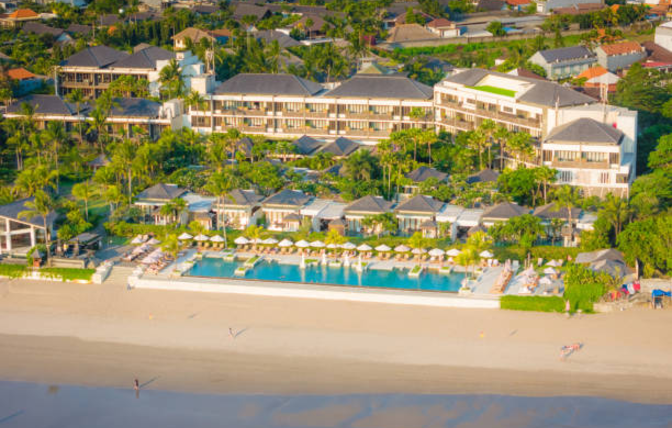
Top 10 best luxury resorts in bali
Bali is equated with tropical chic, where green rice terraces meet cobalt shores and limitless...


